Industrial Robotics Research
Robots already make products, move goods and inspect equipment. The next step is to make them useful across more of the economy—and identify which businesses can turn that work into lasting profits.
This research connects three questions: what robots can do, how large the opportunity could become, and where value accretes. The eight sections below move from real workflows to company exposure, with safety, regulation and evidence in between.
Explore the eight sections
- Types of Industrial Robotics — Thirteen workflows, from factory cells to field robots.
- Where Value Accretes — Components, machines, software, integration, service and financing.
- Ownership and Public-Market Exposure — How listed parents and private specialists change access and disclosure.
- Standards & Safety — The frameworks governing safe, interoperable deployments.
- Regulatory & Compliance — Existing obligations and proposed robotics legislation.
- Mapped Companies — Public businesses, private operators, countries and primary sources.
- Frequently Asked Questions — Adoption, investment exposure and the margin thesis.
- Related Technologies — Follow the links into supporting Physical AI research.
What Industrial Robotics Is
Here, industrial robotics means robots doing physical work for businesses: in factories, warehouses, construction sites, mines, farms and service settings. It includes task-specific machines and mobile robots. Household robots and public-road robotaxis are outside this guide.
Technical Bottlenecks
Robots work best when the job and surroundings are predictable. Wider adoption depends on seeing unfamiliar objects, handling them safely, recovering from mistakes and running long enough to earn back deployment costs.
- Vision — Understand changing scenes.
- Actuation — Handle varied objects precisely.
- Power — Extend mobile runtime.
- Integration — Make the whole workflow reliable.
These challenges overlap with humanoid robotics, but many jobs can be solved by simpler, purpose-built machines. A critical component today may become cheaper and more interchangeable tomorrow. Value could accrue to the provider that delivers the complete outcome and maintains the customer relationship. Integrated systems already exist in specific workflows; broad industry-wide winners remain unsettled. Perception and manipulation research
Market TAM
Market Today
Factory robotics is already deployed at scale. IFR reported 5,079,000 industrial robots in operation worldwide in 2025 and about 603,000 new installations that year. The installed base counts robots in service. Installations count units added during the year. Use the two figures to distinguish deployment scale from annual demand in units. IFR 2025 results
The opportunity extends beyond factory arms into warehouses, farms, mines, hospitals and commercial buildings. Those workflows are broader than IFR’s factory category, and their robot counts cannot simply be added without reconciling definitions. The useful question is how much work can be automated economically, and how much customers will pay for that result.
Market Tomorrow
The long-term question is how much of the economy’s physical work becomes economical to automate. Labor spending makes the scale tangible: seven relevant U.S. industry groups paid $6.85T in annual employee compensation in 2025. That is a broad spending pool, not robotic revenue.
Middle scenario: $16T assumed global industry labor × 20% eligible physical work × 50% adopted by 2035 × 25% supplier spending share = $400B illustrative annual supplier revenue.
This middle scenario sits within a deliberately wide $60B–$1.47T sensitivity. Set adoption to 100% of the assumed eligible work and the conditional labor-linked TAM becomes $240B–$2.10T. The range reflects assumptions about what robots can do and what customers pay; it is not a probability interval.
See the labor model and its assumptions
The measured anchor: seven broad U.S. industry groups paid $6.85 trillion in employee compensation in 2025, using BEA data distributed by FRED. This includes wages and employer supplements. It also includes management, clinical care, sales and other work outside this guide’s robotic workflows.
Observed U.S. labor spending · 2025 annual employee compensation
| Broad industry | Annual cost | Scope boundary |
|---|---|---|
| Manufacturing | $1.413T | Factory production; includes nonphysical work. |
| Construction | $0.854T | Site work; includes planning and management. |
| Transportation and warehousing | $0.601T | Warehouse and delivery work; also includes out-of-scope transport. |
| Health care and social assistance | $1.883T | Hospital logistics is only a small part of this broad sector. |
| Accommodation and food services | $0.584T | Kitchen and cleaning work; also includes nonrobotic services. |
| Retail trade | $0.855T | Inventory and in-store logistics; also includes sales and management. |
| Administrative and waste management services | $0.658T | Cleaning, security and waste workflows; includes other administrative work. |
| Total of these seven non-overlapping industry groups | $6.848T | U.S. only; a broad sector denominator. |
These groups are summed once each. Food processing is inside manufacturing; warehouse and delivery work sit inside transportation and warehousing; cleaning and waste services are inside administrative and waste services. On-site work is assigned to the employer’s industry, not added again as a second job category. Agriculture and mining data were not verified in this pass; inspection spans multiple industries; government defense payroll and self-employment income are not included. This is neither a complete total for all thirteen workflows nor an estimate of automatable wages.
The global extension is a PXS assumption: $12–20T of annual compensation across broad industries relevant to this guide, in constant 2025 dollars. Morgan Stanley illustrates a $40T global labor pool using 4 billion workers at $10,000 each; we use 30–50% of that illustrative pool for industry coverage. Neither the $40T benchmark nor our 30–50% allocation is a measured global payroll series. The U.S. data demonstrate scale; we do not multiply U.S. wages by global headcount. Global labor-pool benchmark
PXS illustrative global scenarios · 2035 · annual values in constant 2025 USD
| Assumption / output | Constrained | Middle | Expanded |
|---|---|---|---|
| Industry labor pool (assumed) | $12T | $16T | $20T |
| Eligible physical-task share | 10% | 20% | 35% |
| Deployment by 2035, within eligible tasks | 25% | 50% | 70% |
| Annual supplier spending / displaced labor cost | 20% | 25% | 30% |
| Annual labor cost addressed | $300B | $1.60T | $4.90T |
| Annual supplier revenue implied | $60B | $400B | $1.47T |
| Full-adoption labor-linked TAM at same prices | $240B | $800B | $2.10T |
Formula: labor pool × eligible task share × adoption × annual supplier-spend share. The 2035 date and every global scenario input are editorial assumptions, not externally validated forecasts. Hold labor volume and real compensation constant: no nominal wage growth, currency appreciation or population growth is added.
TAM versus adoption: the last row sets adoption to 100% within eligible tasks. It is a conditional, labor-linked spending ceiling at assumed customer prices; the 2035 revenue row includes deployment constraints. Customers retain the rest of the labor-cost headroom, but must also fund energy, oversight, maintenance, financing and other costs. The supplier-spend share is not a profit margin or guaranteed customer saving. Capital-equipment purchases must be annualized over useful life before comparison with subscriptions and service. Count the end-customer invoice once across the value chain.
The model excludes new services, quality gains, reduced injury and asset availability benefits, as well as nonlabor replacement spending. It can overstate eligible labor because broad industry payrolls include out-of-scope roles. A task-level, country-level allocation would be needed for an investable forecast.
Compare third-party market forecasts
Third-party outlooks — different scopes, not a consensus range
| Source / scope | Future annual revenue | How to read it |
|---|---|---|
| MarketsandMarkets (Factory industrial robotics · June 2026 report) | $20.8B (2032) | Narrower factory-robot category. |
| ABI Research (Commercial and industrial robotics hardware) | $110.7B (2030) | Includes mobile robots, cobots, humanoids and exoskeletons. Software forecast is reported separately. |
| BCG (Global robotics · published 2021) | $160–260B (2030) | Older scenario range, including professional service robots. Not a newly issued forecast. |
| Morgan Stanley (Broad AI robotics / Physical AI) | $25T (2050) | Context only: scope includes autonomous cars, drones and other categories beyond this guide. Not this page’s TAM. |
Types of Industrial Robotics
Industrial robots are best compared by the work they perform. The following thirteen categories span fixed factory cells, mobile indoor systems and field robotics; each has different operating constraints, buyers and deployment economics.
Manufacturing Robots and Factory Automation
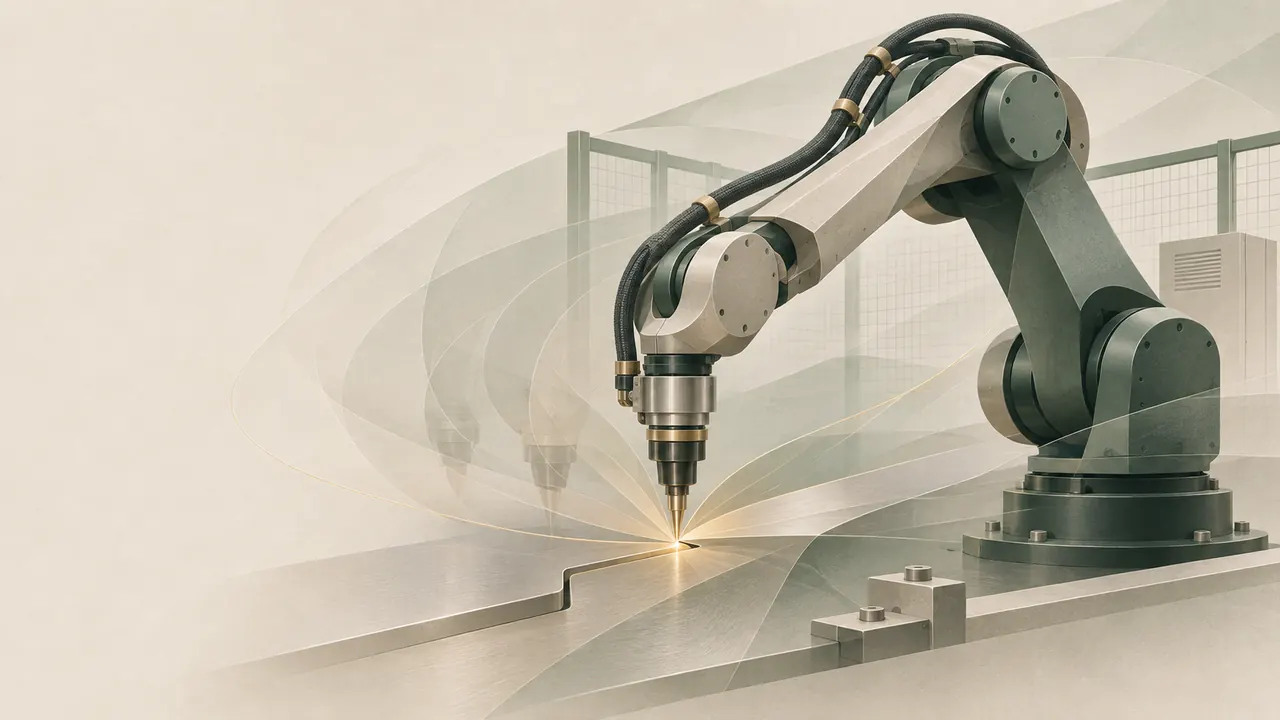
Factory robots do the dull, dangerous, and precise work of making things: arc, spot, and laser welding, machine tending (loading CNC lathes and mills around the clock), assembly, palletizing, polishing, dispensing, and gluing, and vision-guided quality inspection. They span SCARA arms for fast pick-and-place, six-axis arms for welding and assembly, and delta robots for high-speed handling, and collaborative robots (cobots) that work directly alongside people — payloads from a few kilograms to over 1,000 kg, with repeatability measured in hundredths of a millimeter. What was once a human on a weld line is now a commissioned cell running three shifts unattended.
The incumbent arms split three ways rather than one. FANUC's Robot division illustrates the installed-base model: ¥378.6B of revenue (+14.9%), 44% of a record group running a 21.4% group operating margin — durable, disclosed, profitable, and buoyed by its installed-base service mix. Yaskawa's Robotics segment does ¥247.0B but its operating profit fell 14% to an ~8.3% margin on low-value-added large projects. KUKA, owned by Midea since 2022, runs €3.9B of sales at a 1.5% EBIT margin. The wider set confirms the thin-margin pattern: ABB's Robotics & Discrete Automation earned 9.4% operational EBITA pre-divestiture, Kawasaki's Precision Machinery & Robot 5.5%, Omron's Industrial Automation Business 10.5%. Every incumbent arm runs single-digit-to-low-teens operating margins except FANUC's group figure — and that figure mixes in service and lock-in economics.
The frontier is software, not hardware: AI-vision bin picking, force-controlled polishing, no-code scan-to-path programming, and mobile manipulators that move work between stations. The cobot flank is a pure-play loss story — Teradyne's robotics (UR + MiR) shrank to $308M with a $99M pre-tax loss, Dobot and ROKAE IPO'd on unit growth without profit, JAKA's STAR IPO was terminated — and Efort's clean split (robot machines +12.79% GM vs integration −15.32% GM) shows where the margin actually sits. The read is not "arms lose": the #1 holds, the #2 compresses, the #3 is structurally thin, and the contestable cobot flank loses.
Warehouse Robots
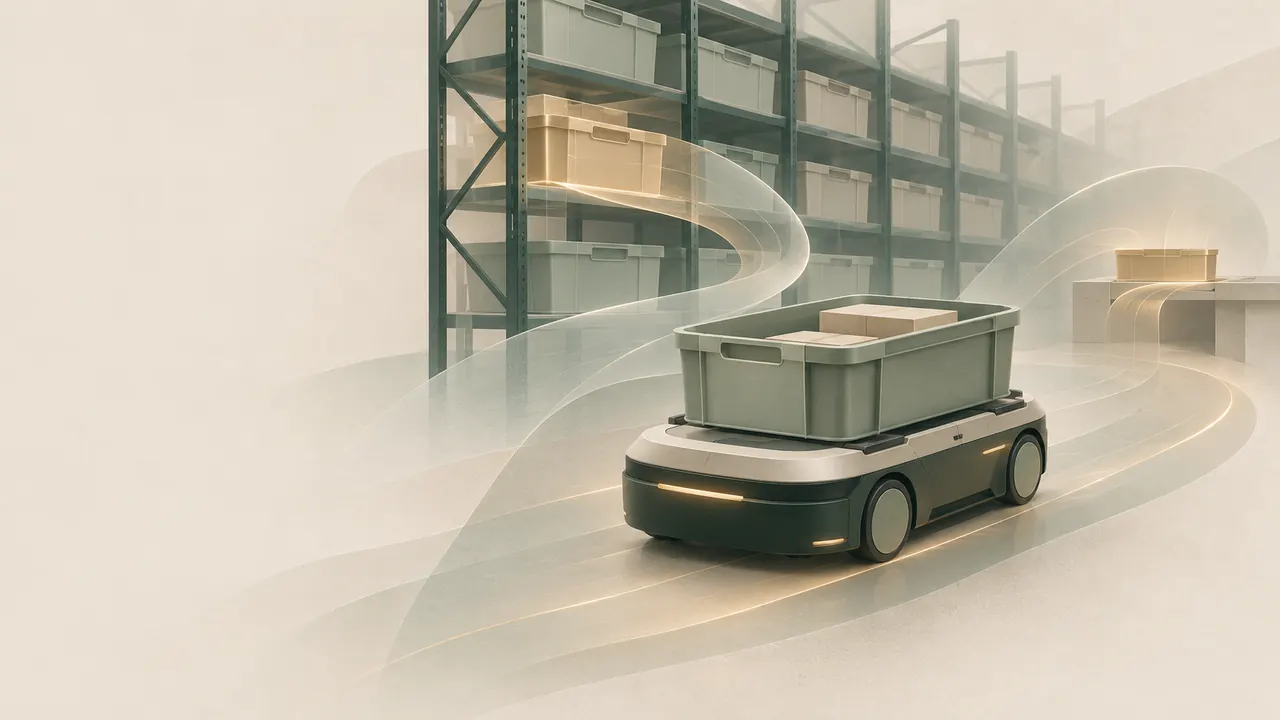
Warehouse robots move, pick, sort, and pack the flow of e-commerce. Autonomous mobile robots (AMRs) ferry totes to stationary pickers, AS/RS cranes and shuttles store and retrieve, cube-storage grids (AutoStore, Ocado) descend bins on demand, and robotic arms pick individual items off a conveyor. A person-to-goods station with AMR support can sustain several hundred picks an hour, and a "dark" distribution center runs 24/7 with the lights off.
It is not one market but three economic models wearing one label. The component/IP model is where margin cleanly accrues: AutoStore reported 72.4% gross margin for 2025 across its cube-storage system business, and Ocado's Technology Solutions confirms the pattern independently with a 25% EBITDA margin on £561M of grid-licensing revenue. The turnkey-systems model is Symbotic: $2.25B of revenue at ~85% Walmart on a cost-plus contract, a $22.5B backlog, and a first operating profit only in Q3 FY2026 (half of it "other income"). The integrator model spans Dematic's 6% EBIT to Daifuku's 15.3% operating margin.
The frontier is AI vision picking at human-comparable speed, autonomous forklifts, and mixed-fleet orchestration (VDA 5050, OPC UA) that lets one software layer command robots from different vendors. The read: margin tracks lock-in, IP licensing, and project discipline — not "being a warehouse company" — and the biggest risk is buyer concentration (Symbotic's 85% Walmart).
Mining and Drilling Robots
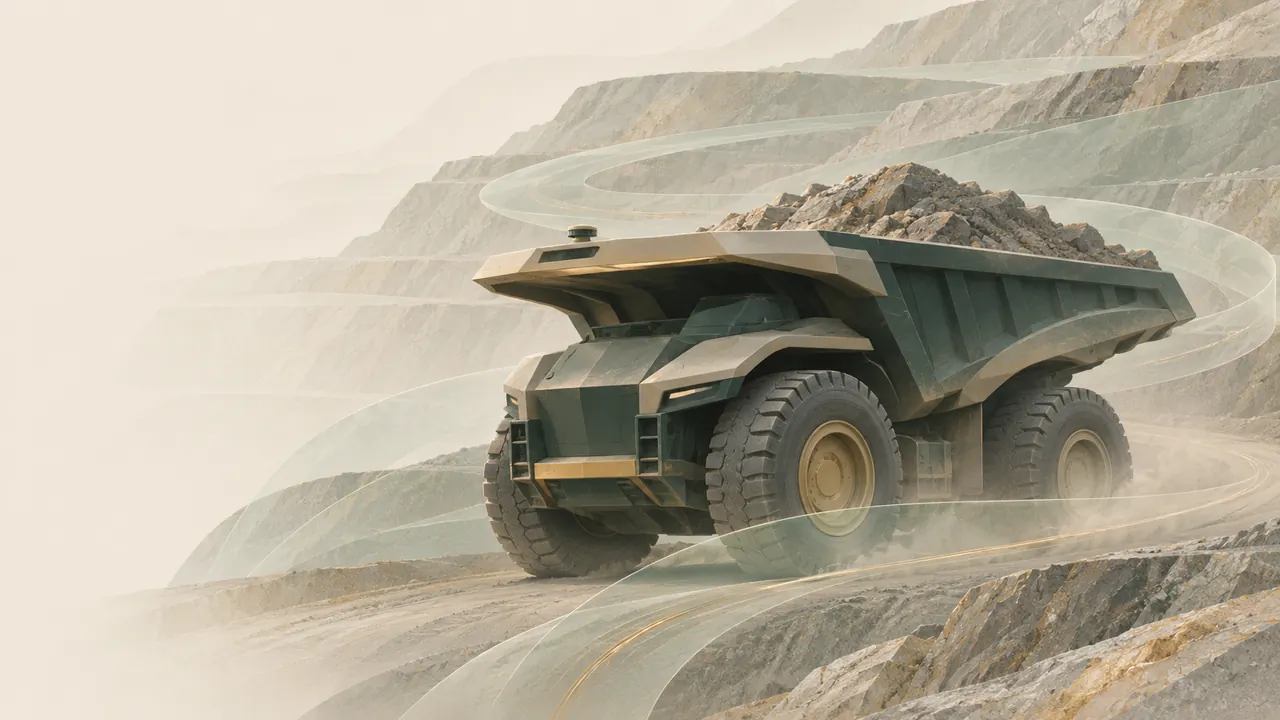
Mining robots move earth and drill rock where humans are expensive and unsafe: autonomous haul trucks carry up to 400 tonnes on fixed loops, autonomous drill rigs blast-hole to a plan, and teleremote loaders work underground. This is the clearest profitable fleet-scale autonomous mining in the evidence set, because the environment is controlled, the routes are fixed, and the buyers are a handful of very large operators.
Caterpillar's Resource Industries segment does $12.2B of revenue and $2.0B of profit, but AHS is not broken out (~700 autonomous trucks, 11B+ tonnes). Komatsu is the actual leader: 1,000 autonomous ultra-class trucks, first to market in 2008. Epiroc reports 3,900+ driverless machines across a mixed tier (load/haul, drilling, teleremote). The customer payoff is Vale's own numbers: 11% less fuel, 11% more hourly productivity, 35% longer tire life.
The frontier is fully autonomous mixed fleets (CAT's Command retrofits competitor trucks), underground autonomy, and AI orebody sensing that grades rock before it is blasted. The finding: profitable fleet-scale autonomy exists — and has no standalone ticker. It lives inside CAT's and Komatsu's parent segments, the "parents hide winners" cell in its purest form.
Construction Robots
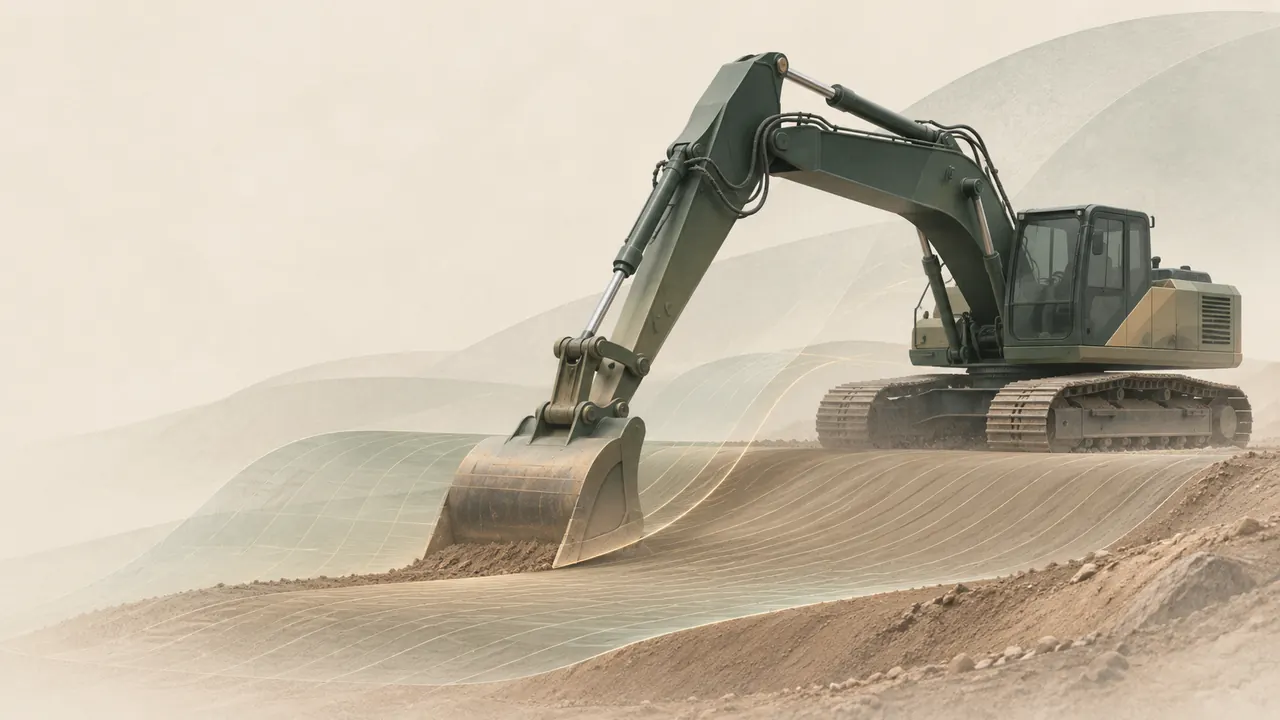
Construction robots do earthmoving, grading, and assembly work where the labor pool is largest and the automation lowest. Autonomous dozers and excavators (Built Robotics retrofits CAT equipment) move earth without a cab operator; machine control (Trimble) grades to centimeter accuracy on unstructured sites that change daily; rebar-tying, brick-laying, and layout-printing robots automate the repetitive manual steps; drones survey progress against plan. The buyer is the fragmented, price-sensitive general contractor — and the job is one of the largest labor pools on earth.
The public leaders are Caterpillar, Komatsu, and John Deere, who run construction-autonomy programs as parent initiatives with no disclosed economics, and Trimble, which supplies the machine-control layer as a disclosed line. The private challengers — Built Robotics (autonomous excavators/dozers), Dusty Robotics (layout), Canvas (drywall finishing) — have funding but no public P&L. No fleet-scale construction autonomy has a disclosed P&L today.
The thesis is that construction repeats mining's autonomy arc, and the demand is the largest whitespace in the map — but the economics are not yet there. The read: the single biggest job by labor pool and the least automated, which is why it is the "next mine" and a watch item rather than a finding.
Agriculture and Farming Robots
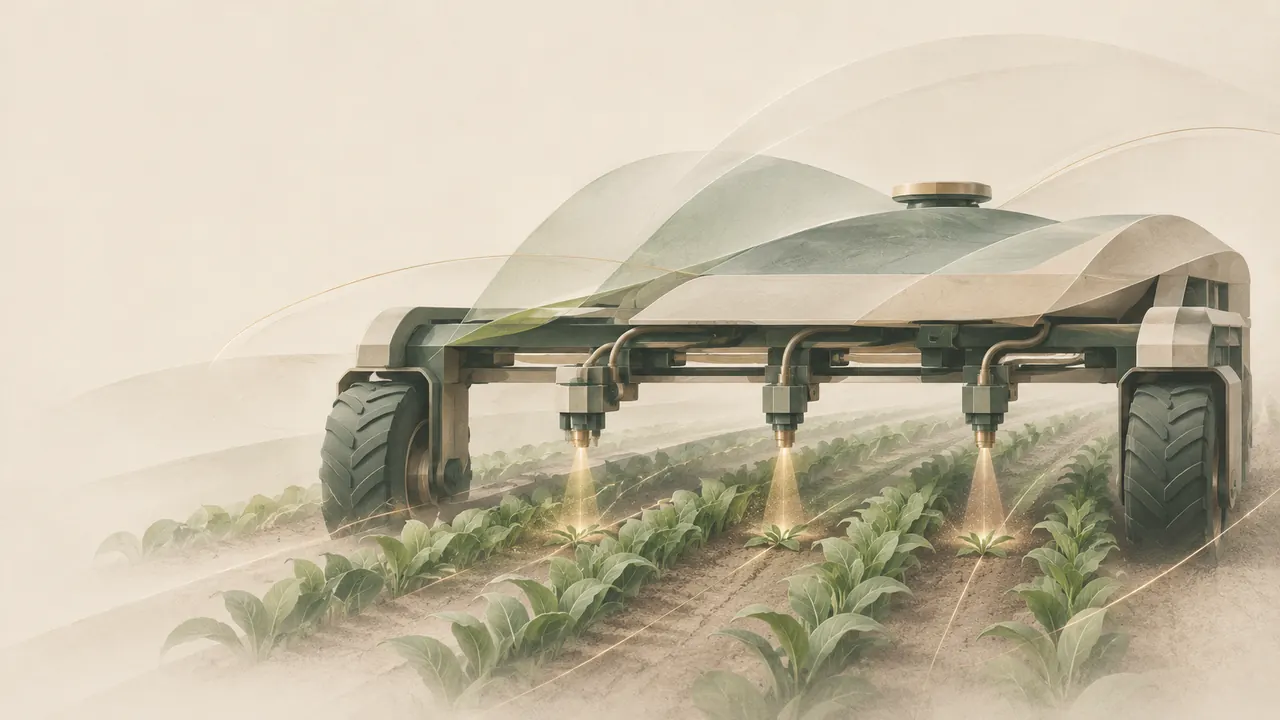
Farming robots weed, spray, harvest, and milk with a precision no hand crew matches. Laser weeders (Carbon Robotics' LaserWeeder) kill 5,000+ weeds a minute and replace a 75-person hand crew; precision sprayers (Deere's See & Spray, from Blue River) cut herbicide use 77%; autonomous tractors (Deere's 8R) till, plant, and spray without a driver; automatic milking (Lely, DeLaval) runs 100,000+ dairy farms. Ag-robotics drew $2.3B of venture capital in 2025.
The public leaders are John Deere (autonomous 8R since 2024, See & Spray) and CNH Industrial; the private challengers are Carbon Robotics (~$150M raised, laser weeding), Monarch Tractor ($133M, electric autonomous), and the dairy incumbents Lely and DeLaval (private). The economics are stark: hand weeding costs $150–300 an acre, laser weeding $20–35 an acre.
Agriculture is the most mature job by adoption, and it reinforces the value-chain thesis in a new way: the tractor OEM (Deere) and the AI-software layer (Carbon's "Large Plant Model") capture the economics, while the machine itself is often a retrofit. Dairy milking is the exception that proves the rule — a closed installed base of per-farm hardware and service that replicates FANUC's lock-in pattern in a barnyard.
Infrastructure Inspection and Maintenance Robots
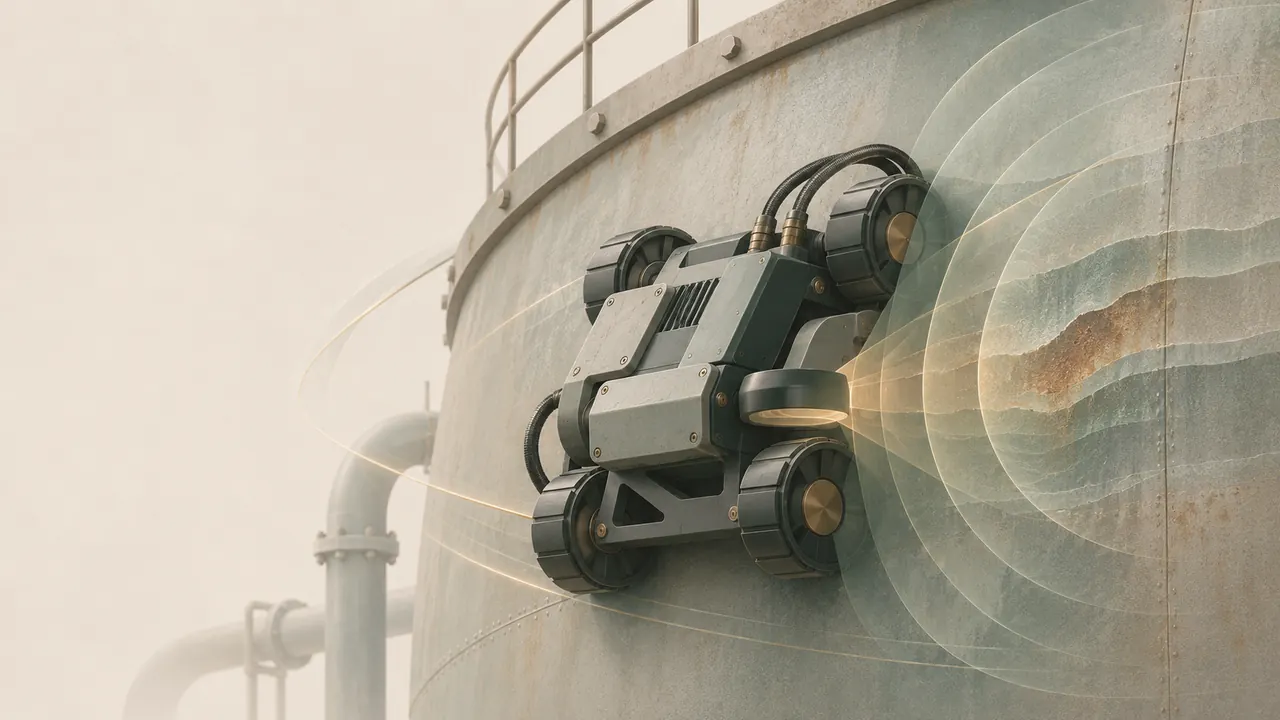
Inspection robots climb, crawl, and fly where human inspection is dangerous. Wall-climbing robots (Gecko's magnetic wheels + ultrasonic sensors) scan boiler tubes, tanks, and dams for corrosion and cracks; quadruped platforms (ANYbotics, Boston Dynamics' Spot) patrol power plants and rail; drones (Skydio, Flyability) inspect confined spaces; wind-turbine robots (Aerones) clean and maintain blades. The output is not the robot — it is a digital twin with a predicted remaining life.
Gecko Robotics is the category leader (private, ~$1.3B valuation, Series D $125M, 150 robots feeding its Cantilever software platform). ANYbotics, Skydio, Flyability, Aerones and DJI are privately held. Boston Dynamics is controlled by Hyundai Motor Group; listed industrial parents provide indirect exposure. DJI company information; Hyundai ownership announcement.
Inspection is "robot-enabled software": the moat is the data platform (Gecko's Cantilever), not the crawling hardware. Against $500B+ a year of industrial maintenance spend, it is the purest "software layer captures, hardware is commodity" cell in the map — and almost entirely private, so the disclosure caveat bites hardest here.
Recycling and Waste-Sorting Robots
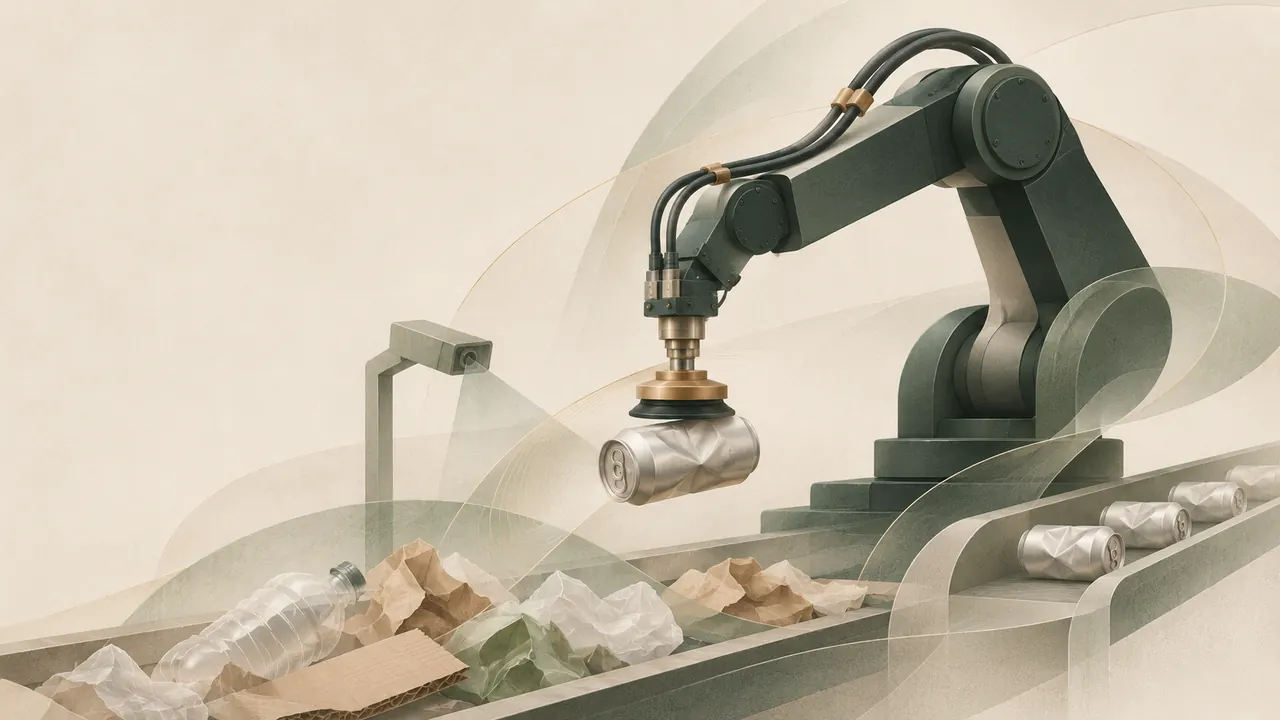
Recycling robots sort the waste stream at a speed and precision humans won't sustain. Sensor-based sorters use near-infrared and cameras to identify and eject material by type; AI-vision arms pick a clean aluminium can off a mixed conveyor at 40–80 picks a minute, around the clock, in a plant nobody wants to staff.
TOMRA Recycling is the fat-margin incumbent: €266M of revenue at a 52.5% gross margin and 22.7% EBITA, with 11,200 machines installed. Terex Materials Processing ($1.68B at 13.9%) is the only listed US exposure, a diversified parent segment rather than waste-robot revenue. AMP Robotics (~$91M raised) and Glacier (~$16M) are the private AI-picking challengers with undisclosed revenue and install bases.
The frontier is 100+ picks per minute, new material streams (e-waste, construction and demolition debris), and dislodging TOMRA's installed base. The read: a clean "real demand, one fat-margin incumbent" cell — sensor-based sorting already makes disclosed money at scale; the AI-vision challengers have not yet produced disclosed economics.
Food Service and Kitchen Robots
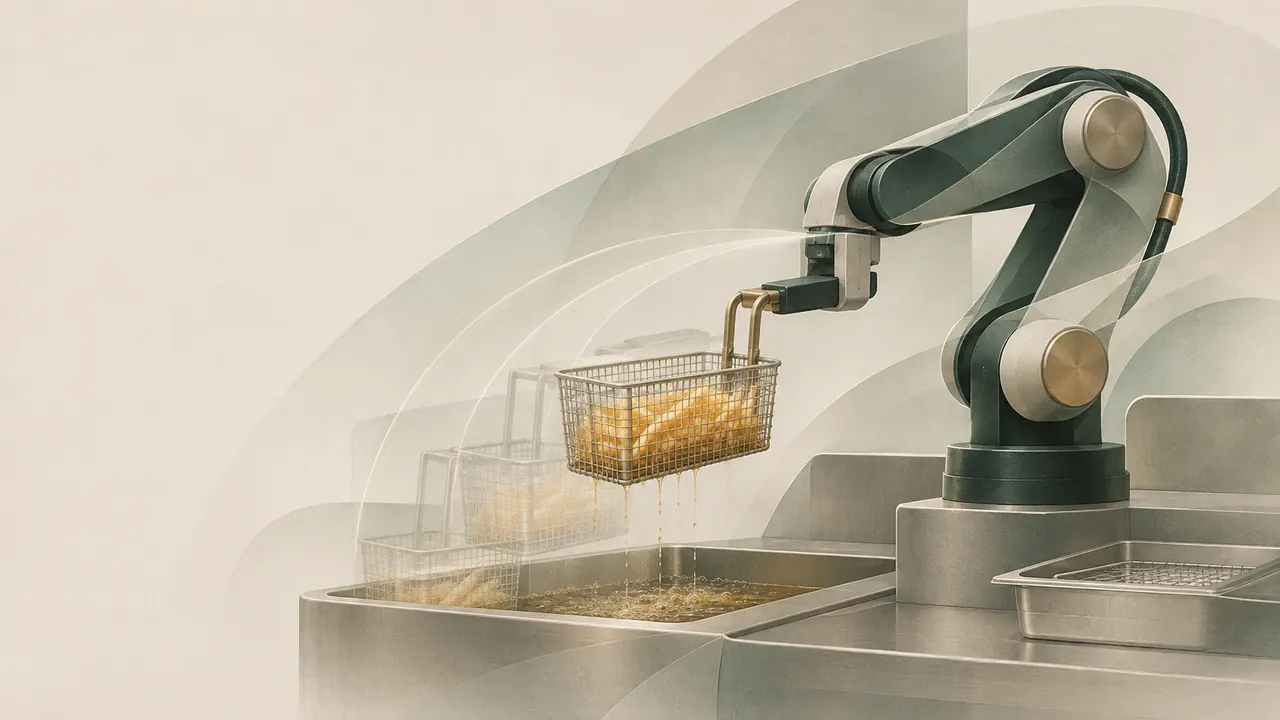
Kitchen robots cook, assemble, and serve the tasks a line cook won't stay for. Fry and grill robots (Miso's Flippy) run 100+ baskets an hour, twice human speed; pizza and salad assembly (Picnic) portions toppings to spec; serving robots (Bear's Servi) deliver dishes and collect plates; food-processing machines (JBT Marel) cut, debone, and portion at industrial scale.
Miso Robotics (private, ~$65M raised, Flippy in White Castle, Jersey Mike's, and Cinnabon at ~$3,000/month RaaS, Ecolab-backed) and Bear Robotics (controlled by LG Electronics) lead the quick-service kitchen. JBT Marel is the listed food-processing group following the January 2025 combination of JBT and Marel. Company filing.
The quick-service kitchen is the purest "jobs-to-be-done" cell — specific, repetitive, labor-starved tasks. But the economics are RaaS subscriptions on private books, so it is real demand with almost no disclosed P&L — except the food-processing incumbents, who sell automation as capital equipment and disclose. The read: a large, real market whose public capture sits one layer up (JBT Marel), not in the robot arm itself.
Healthcare and Hospital Logistics Robots
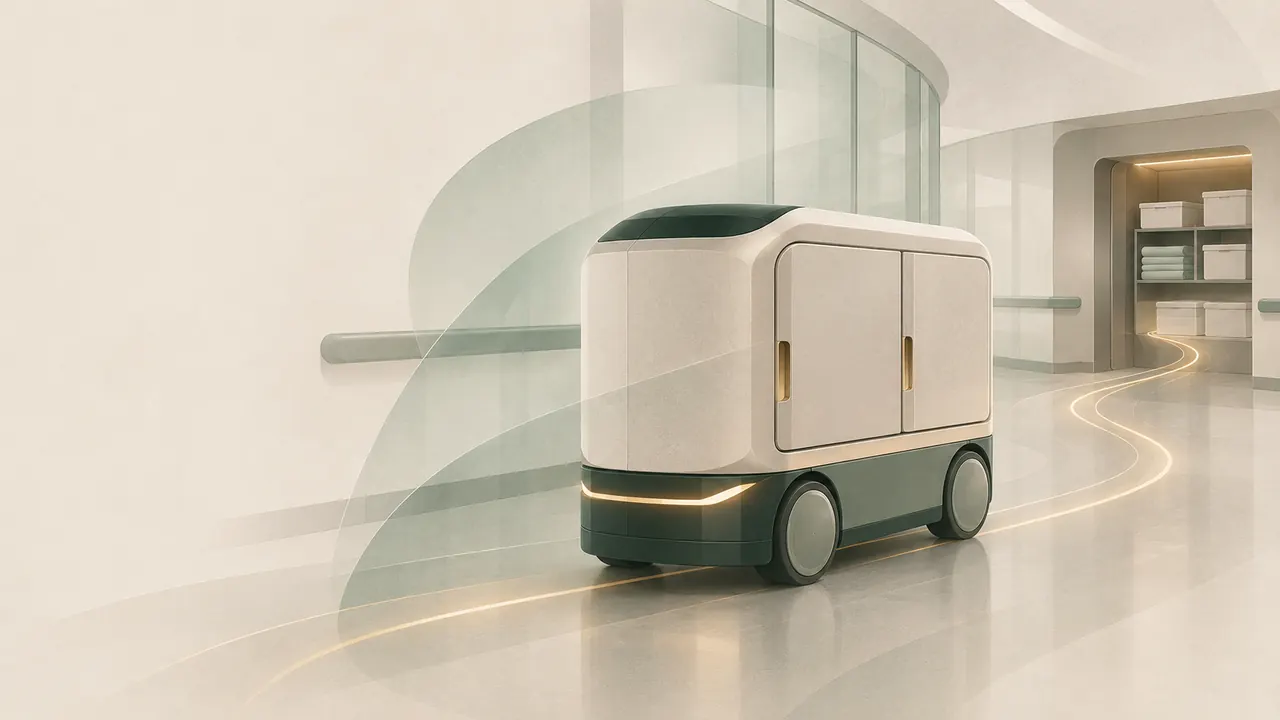
Hospital robots move medicine, samples, meals, and linens the last mile. Diligent's Moxi has completed 1M+ deliveries across 25+ hospitals and saved staff ~600,000 hours; Aethon's TUG hauls carts; Omnicell automates medication management; Swisslog's TransLogic moves items too large for pneumatic tubes.
Diligent Robotics (Moxi) was acquired by Serve Robotics in 2026, folding hospital logistics into a public multi-vertical robotics platform; Aethon is a subsidiary of Singapore-listed ST Engineering; Omnicell is public; Swisslog Healthcare sits under KUKA/Midea. Service-robotics in healthcare is projected to grow 15–18% a year.
Hospital logistics is "warehouse robots in scrubs" — AMRs doing last-mile delivery in a controlled indoor environment, but with a buyer (health systems) that values reliability over unit cost. The disclosed economics flow to the incumbents (Omnicell) and the parent (Midea via Swisslog), not the pure-play — the same parent-absorption pattern, in a new vertical.
Cleaning Robots

Cleaning robots scrub, vacuum, and sanitize commercial spaces unattended: autonomous floor scrubbers (Tennant's T7AMR, the Brain Corp BrainOS fleet) run empty aisles at 3 a.m., and robotic vacuums and façade cleaners handle repetitive surface work. They are sold as equipment, as a subscription, or as an outcome contract.
The channel rides the incumbent Tennant (FY2024 $1.29B, FY2025 $1.20B), but its robotic floor-care business is not a separately disclosed segment. The software layer — BrainOS — reports installed-fleet totals, not revenue or margin, and no enterprise ROI is yet established.
The frontier is multi-floor autonomy, restroom and hospital disinfection, and moving from fleet-count marketing to measured labor savings. The read: a real workflow with no clean disclosed economics yet — one of the jobs that, so far, replicates nothing about the value-chain thesis.
Defense and Security Robots
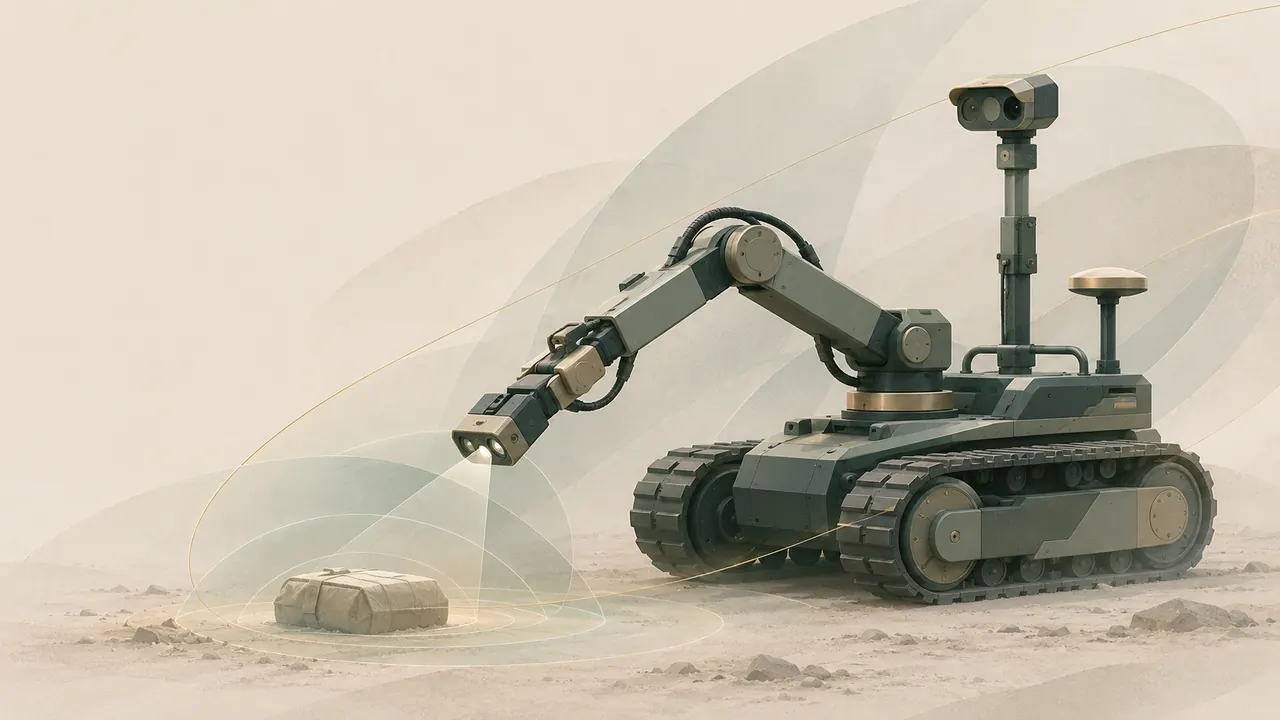
Defense robots clear, scout, and secure where the risk to a person is highest: EOD robots neutralize improvised explosives, UGVs carry recon sensors and logistics, and quadruped platforms (Ghost Robotics' Vision 60) patrol perimeters. The buyer is a ministry rather than a margin-disciplined operator.
The pure UGV plays are being absorbed into primes: Ghost Robotics went to Korea's LIG Nex1, and the main listed exposure is Teledyne's Digital Imaging segment ($3.16B), inside which UGV-specific revenue is not separated. State gating — export controls, and China's prohibition of the ABB robotics deal — is most acute here, and it cuts both ways.
The frontier is armed autonomy (policy-gated) and logistics UGVs that follow troops off-road. The read: real and funded, but economically invisible — another disclosure void that currently tests nothing about the map's center of gravity.
Last-Mile and Sidewalk Delivery Robots
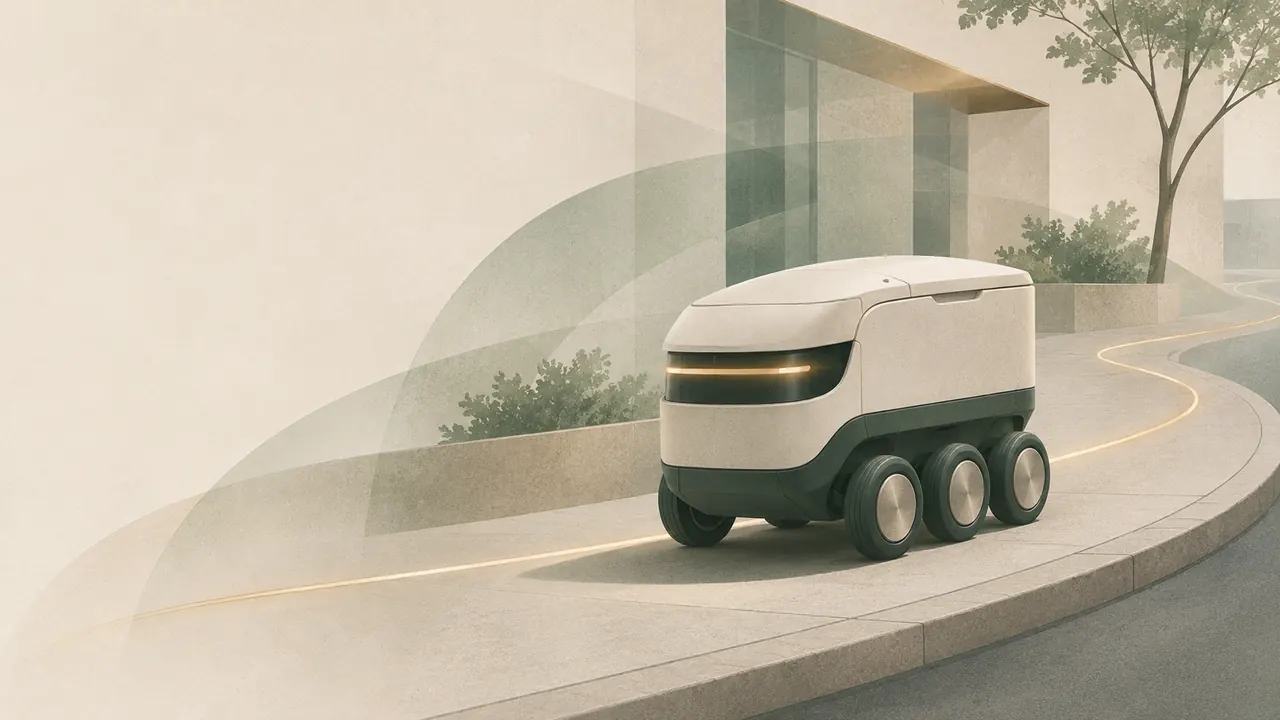
Sidewalk delivery robots carry food and groceries the final few blocks. Serve Robotics' fleet of 2,000 robots spans 20 cities with a 99.8% completion rate; Starship's robots handle campus and neighborhood delivery. Zero-emission, low-speed, geofenced — the closest public-facing job in scope.
Serve Robotics (Nasdaq: SERV) is the map's one public pure-play robotics revenue story: FY2025 revenue $2.7M (up ~400%), FY2026 guidance $12M, and it acquired Diligent Robotics in 2026. Starship is private and larger in fleet. The economics are still tiny and loss-making (EBITDA deeply negative) but compounding ~300% a year.
Last-mile delivery is where the slogan is most literal — "robotics will disrupt business and work before the home," delivered to your curb. It is a real, disclosed, but currently loss-making pure-play: the first place a standalone ticker is forced to show the ugly P&L of the vertical layer, exactly as the thesis predicts.
Retail Inventory Robots
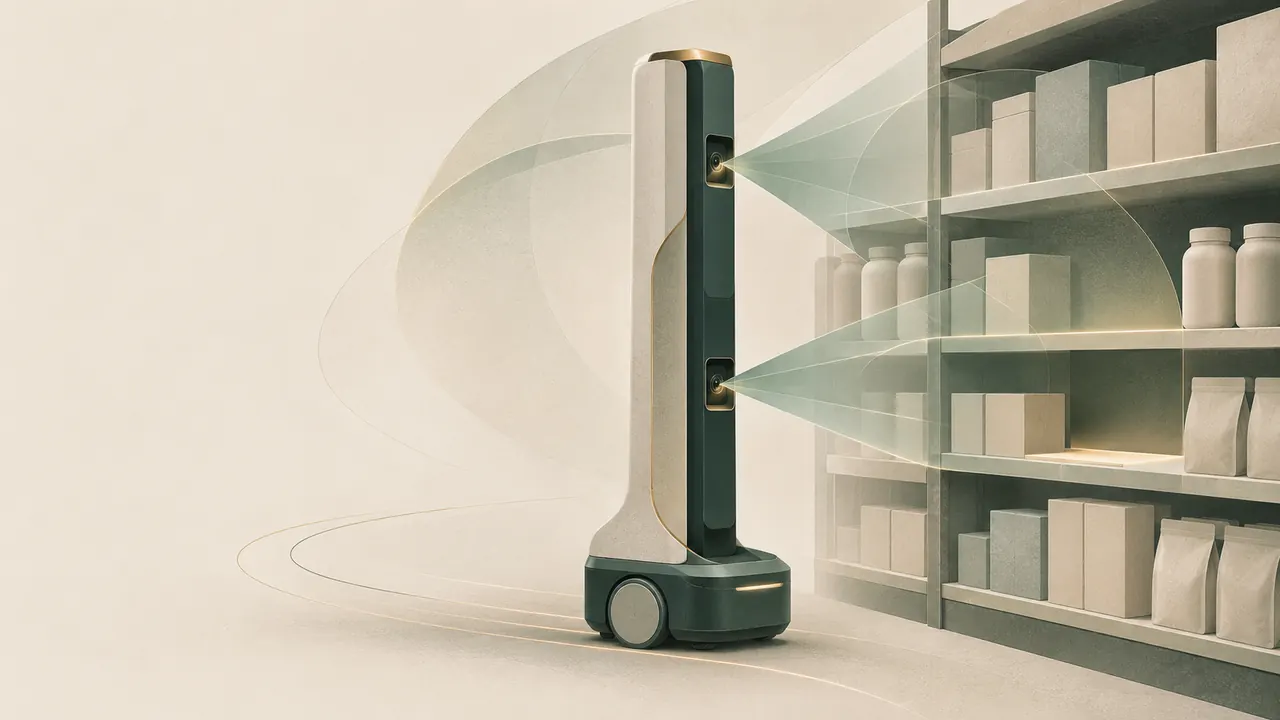
Inventory robots scan shelves and flag the gaps. Simbe's Tally traverses aisles, captures shelf photos, and detects out-of-stocks, pricing errors, and planogram gaps — 600M shelf gaps detected, 18B price tags scanned, across ~1,000 stores over 10 years. Fixed sensors and RFID complete the picture.
Simbe Robotics (private, RaaS subscription, deployed at BJ's, Schnucks, SPAR, Harmons) is the leader; Badger Technologies, a Jabil division, is another supplier; Bossa Nova (Walmart's shelf-scanner) wound down. Simbe is privately held; Badger provides indirect public-market exposure through Jabil. Jabil product division.
Retail inventory is a pure RaaS data-play: the robot is a sensor that sells the resulting shelf data, not the hardware. It is real demand with limited standalone financial disclosure, illustrating the distinction between a robotic platform, a data service and a diversified public parent.
Where Value Accretes
A robot deployment combines precision hardware, task software, installation, maintenance and capital. Value can accrue at more than one layer, but revenue growth at one layer does not establish attractive returns at another. The useful comparison is the profit and cash generated over the installed system's life. Gross margin, operating margin and EBITDA margin measure different things and should not be ranked as if they were interchangeable.
Components
Reducers, servo motors, drives, encoders, force sensors and end-effectors determine whether a robot can move accurately and withstand repeated loads. Component suppliers can benefit from qualification cycles: changing a gearbox or motor may require mechanical redesign, controller tuning and renewed reliability testing. Nabtesco and Harmonic Drive Systems illustrate the precision-motion layer; Inovance supplies drives, controls and robot products.
The economic advantage depends on whether precision remains difficult to reproduce at the required cost and volume. A concentrated supplier base can coexist with weak factory utilization or falling selling prices. The evidence to examine is therefore product-level pricing, capacity utilization, customer concentration and replacement demand, alongside margins. A supplier's total company profit should not be described as its robotics-component margin when the business also serves other markets. Nabtesco corporate and business information; Harmonic Drive Systems investor materials.
Machines
Robot manufacturers package components into reliable arms, mobile platforms or purpose-built equipment. Their value extends beyond payload and repeatability to application libraries, controllers, distribution, trained technicians and compatibility with an installed base. A factory that already programs and maintains one vendor's cells faces switching costs that a first-time buyer does not.
FANUC, Yaskawa, Kawasaki and KUKA compete in factory automation; Caterpillar and Komatsu embed autonomy into heavy equipment. Their economics are not directly comparable: a diversified equipment parent's reported margin includes much more than autonomous machines. Lower-cost arms and cobots also make basic hardware more contestable. The question is whether customers pay for a differentiated production outcome or can substitute another machine without changing the surrounding workflow. FANUC integrated reports; Yaskawa investor relations; KUKA business overview.
Autonomy and fleet software
Perception, motion planning, task scheduling, exception recovery and fleet orchestration turn individual machines into useful capacity. Software can become deeply embedded where it coordinates storage layouts, enterprise systems and many robots. AutoStore's cube ecosystem and Brain Corp's autonomy platform illustrate different routes: one combines a proprietary storage architecture with software, while the other supplies autonomy to equipment partners.
The distinction matters financially. AutoStore reported 72.4% gross margin for 2025, but that is a group system margin, not a separately disclosed software margin. BrainOS deployment counts likewise do not establish software revenue or profitability. Open interfaces can reduce connection costs while leaving optimization, recovery behavior and operating data differentiated. Value accrues when software improves the customer's repeatable operating result and the supplier can retain an economic share of that improvement. AutoStore 2025 annual report; Brain Corp platform.
Integration
Integration connects the robot, tooling, conveyors, safety systems and customer software into a commissioned workflow. It includes process design, simulation, installation, acceptance testing and staff training. The integrator must often absorb variation in the customer's building, product mix and existing systems before the installation can deliver its promised throughput.
Reusable engineering and disciplined project selection can improve returns; extensive customization and poorly controlled scope can consume them. ATS's fiscal 2026 annual information form describes fixed-price contracts and the risk that estimated completion costs prove insufficient. Daifuku's 2026 investor commentary attributes improved profitability partly to production efficiency and project management. These are different business outcomes within the same broad layer. Compare backlog quality, acceptance milestones, cash collection and warranty exposure as well as reported revenue. ATS annual information form; Daifuku shareholder update.
Service and aftermarket
Commissioning starts an operating relationship. Spare parts, preventive maintenance, repairs, software support, upgrades and training can produce repeat business over a machine's useful life. The customer's incentive is practical: an inexpensive replacement component matters little if an unplanned stoppage disrupts an entire production line.
FANUC explicitly offers maintenance for as long as customers continue using its products. That creates an installed-base relationship, but does not by itself reveal a standalone service margin. Suppliers still need parts availability, trained field staff and a response network; those capabilities cost money. The most useful evidence is renewal or attachment rates, service sales, response performance and cash generation, with clear separation between recurring contracts and one-time repair work. FANUC lifetime maintenance policy; Daifuku service-sales reporting.
Financing and Robotics-as-a-Service
Robotics-as-a-Service (RaaS) changes how the customer buys automation. A subscription can bundle equipment, software, support and upgrades, spreading the customer's payments across use rather than requiring a large initial equipment purchase. Locus describes an all-inclusive subscription priced per robot per year and billed annually in advance.
This can align the vendor with ongoing operating performance, but it also changes who funds the equipment and bears utilization, repair and obsolescence risk. A recurring invoice is not enough to demonstrate attractive returns. Analysis needs the machine's build cost, deployment expense, contract duration, maintenance burden, customer retention, financing cost and residual value. Customer payback claims should be distinguished from the provider's return on capital. Locus's published offer establishes the commercial model; it does not disclose all the inputs needed to calculate provider lifetime profit. Locus RaaS model.
China's expanding automation supply base affects several of these layers at once. More competitive hardware can lower deployment cost and expand adoption while putting pressure on equipment and component pricing. That makes application performance, lifecycle support and capital discipline increasingly important differentiators; it does not establish that every software vendor will capture the savings. IFR China release.
Ownership and public-market exposure
Parent absorption and adverse selection. CAT hides AHS inside Resource Industries; Inovance hides its robot in a 3.98% bucket. Standalone robotics reporting and diversified-parent reporting expose different parts of the economics. A parent segment can contain profitable equipment and service operations without separately disclosing the contribution of autonomy.
Ownership changes and disclosure. Acquisitions can give listed parents access to new robotic workflows without creating a separately traded robotics company. JBT and Marel combined in January 2025; Serve completed its Diligent acquisition in January 2026. The distinction between an announced transaction and a completed one matters when assigning company exposure. Likewise, a proposed listing should not be treated as an available public stock until listing is established. JBT Marel filing; Serve completion filing.
Standards & safety
Robot safety is a system property. A safe arm can still become part of an unsafe application if its tool, payload, surrounding equipment or operating procedure introduces hazards. The relevant framework changes with mobility, public access and the work performed; there is no single certificate that covers every robot in this directory.
Standards by mobility class
| Deployment | Published framework | What it addresses |
|---|---|---|
| Fixed industrial arms and cells | ISO 10218-1:2025 and ISO 10218-2:2025 | Part 1 concerns the robot; Part 2 concerns the integrated application and cell across its lifecycle. |
| Collaborative industrial applications | ISO/TS 15066:2016, read with the current ISO 10218 series | Requirements for collaborative systems and their working environment; collaboration must be assessed for the complete task. |
| Driverless industrial trucks | ISO 3691-4:2023 | Hazards associated with driverless trucks and their systems, within the standard's stated scope. |
| Industrial mobile robots and fleets | ANSI/A3 R15.08-1 and R15.08-2 | Manufacturer responsibilities and integration into a specified operating environment; includes configurations with active attachments and manipulators. |
| Autonomous earthmoving and mining | ISO 17757:2019 | Autonomous and semi-autonomous machines and machine systems in earthmoving and mining. |
| Service-robot operations | ISO 31101:2023 | Safety management for application services delivered using service robots; a different scope from industrial-arm design. |
The ISO 10218-2 scope explicitly excludes several applications and does not cover all mobility, hygienic or explosive-environment hazards. A hospital delivery robot, a public sidewalk machine and a mining truck therefore need application-specific assessment rather than an industrial-arm standard applied indiscriminately. ISO 10218-2 scope.
Interoperability standards
VDA 5050 version 3.0.0, published in March 2026, specifies the exchange of job and status information between a central control system and mobile robots for intralogistics. It can support mixed-vendor fleet integration, but a common message format does not establish common navigation performance, collision avoidance or certified safe behavior. Those remain separate system-design responsibilities. VDA specification and releases.
OPC UA for Robotics Part 1: Vertical Integration, version 1.02, defines a shared information model for robot and motion-device data. Its emphasis is exposing condition and diagnostic information to higher-level manufacturing systems. It is useful for monitoring and enterprise integration; it should not be described as a universal real-time motion-control interface. OPC Foundation specification; working-group scope.
Standards under development
ISO's live catalogue distinguishes draft projects from published requirements. Three projects are particularly relevant to the next deployment wave:
| Project | Status checked 9 November 2026 | Why it matters |
|---|---|---|
| ISO/CD 25785-1 | Committee draft, under development | Safety for industrial mobile robots that require active balancing, including relevant legged and wheeled configurations. A distinct problem from a statically stable warehouse cart. |
| ISO/DIS 18646-7 | Draft International Standard; DIS registered 28 October 2026 | Performance testing for service robots travelling around people, including effects on pedestrian movement. Performance testing is separate from establishing safe operation. |
| ISO/DTR 20218-3 | Draft technical report, under development | Explanatory guidance for the second edition of ISO 10218-2; a technical report should not be confused with a new product-safety law. |
Interoperability is also advancing into published standards: ISO 21423:2026, published in October 2026, covers communications among industrial mobile robots, fleet managers and other equipment in shared industrial workplaces. Its scope expressly excludes safety and navigation requirements. That is an important boundary: interoperable communications do not establish safe autonomous behavior. ISO publication and scope.
For buyers, this creates three separate questions: does the machine meet the relevant safety requirements; can it exchange the necessary information with other equipment; and can its claimed operating performance be tested consistently? Progress on one does not settle the others. Published revisions, draft projects and national adoptions should be tracked separately; an ISO publication date alone does not establish its legal status in a particular market.
Deployment and lifecycle safety
Risk assessment must include teaching, setup, fault recovery, cleaning and maintenance as well as normal automatic operation. These are situations in which people may enter spaces normally separated from the robot. Changing a gripper, payload, route or adjacent conveyor can change the risk assessment even when the robot itself is unchanged. OSHA's technical manual discusses safeguards, task-based assessment and the responsibilities associated with an integrated robot system. OSHA robot-system safety guidance.
Regulatory & Compliance
Rules reviewed on 9 November 2026. Regulation attaches to the product, its intended use and the deployment location. The examples below cover major US, EU, UK and Japanese frameworks and selected Chinese standards; they are not a complete register of every local permit or sector-specific obligation. A technical consensus standard, a binding regulation and a proposed bill have different legal status.
United States: workplace safety and deployment permits
OSHA states that it has no standard written specifically for the robotics industry. Existing requirements still apply, including machine guarding under 29 CFR 1910.212, hazardous-energy control under 1910.147, electrical requirements and relevant workplace rules. OSHA also distinguishes national consensus standards from OSHA regulations. State-plan requirements may differ or be more stringent. OSHA applicable standards.
Public-space deployment adds another layer. Pennsylvania's Act 106 of 2020 established a framework for personal delivery devices. PennDOT administers authorizations; the current code addresses operating conditions, equipment and incident reporting, while retaining specified local regulatory powers. A warehouse robot's technical suitability therefore does not authorize operation on a public sidewalk. Pennsylvania Act 106; current Chapter 85; PennDOT authorization process.
European Union: machinery, AI and cybersecurity
Machinery Regulation (EU) 2023/1230 applies generally from 20 January 2027, replacing the Machinery Directive 2006/42/EC. Machinery placed on the market before that date must comply with the existing framework. The regulation addresses machinery and related products, including relevant software-related safety risks, with manufacturer and conformity-assessment responsibilities determined by the product and its classification. European Commission machinery guidance; EUR-Lex regulation summary.
The AI framework changed during 2026. The Council's 29 June 2026 adoption announcement gives revised high-risk application dates of 2 December 2027 for stand-alone high-risk systems and 2 August 2028 for high-risk AI embedded in products. It also describes a specific machinery treatment: machinery products are exempted from direct AI Act applicability, with AI-related safety requirements to be introduced through secondary legislation under the Machinery Regulation. The practical research task is to follow the adopted text and subsequent machinery measures, rather than repeating the original 2027 product-AI timetable or treating every AI-enabled robot as automatically high-risk. Council adoption announcement; Commission implementation overview.
Cyber Resilience Act (EU) 2024/2847 addresses products with digital elements. Reporting duties for actively exploited vulnerabilities and severe security incidents began on 11 September 2026; the main requirements apply from 11 December 2027. Connected robot manufacturers need to assess product scope, lifecycle support and reporting responsibilities separately from physical machine safety. Commission CRA overview; reporting obligations.
United Kingdom, Japan and China
In Great Britain, the Supply of Machinery (Safety) Regulations 2008 remain a core product-safety framework. Government guidance provides for continued recognition of CE marking alongside UKCA for relevant products. Northern Ireland has a distinct product-market framework; EU machinery changes should not simply be assumed to apply identically across the UK. UK machinery guidance; current marking guidance.
Japan has explicit industrial-robot provisions in its Ordinance on Industrial Safety and Health. Articles 150-3 to 150-5 address teaching work, protection during operation, and inspection or repair within the robot's movement range; Article 151 addresses pre-work inspection. These provisions demonstrate why robot deployment must be assessed against local workplace law as well as internationally published standards. MHLW current ordinance, industrial-robot section.
China maintains its own national standards catalogue. Examples include GB/T 20867.1-2024 on applying industrial-robot safety requirements, GB/T 44253-2024 on inspection-robot safety and GB/T 5226.7-2020 on industrial-robot electrical equipment. These catalogue entries establish the existence and scope of the named standards; they do not establish that every GB/T document is mandatory or that compliance with an ISO edition automatically satisfies Chinese obligations. SAMR industrial-robot application standard; inspection-robot standard; electrical-equipment standard.
Proposed US robotics legislation
The National Commission on Robotics Act, introduced as H.R. 7334 and S. 4686 in the 119th Congress, would create a commission to assess American robotics competitiveness and recommend policy. The Senate introduced text is dated 4 June 2026. It is a proposal for national strategy and recommendations, not a robot product-safety approval regime. House introduced bill; Senate introduced text.
The American Security Robotics Act of 2026, H.R. 8189, introduced 2 April 2026, would restrict federal procurement and operation of covered unmanned ground-vehicle systems associated with covered foreign entities, with specified exceptions. Its proposed scope includes remote-surveillance, patrol, mobile and humanoid systems. The introduced bill is evidence of a policy direction, not proof that its restrictions are enacted law. This review verified the introduced texts; it did not establish enactment of either proposal. H.R. 8189 introduced text.
Where compliance costs land
The manufacturer supplies product design and documentation, the integrator must assess the completed application, and the operator must maintain safe work procedures and respond to changes. Connected products add security-update and incident-response work. Public-space robots may also need local operating authorization. These obligations can favor suppliers with repeatable documentation, field support and validated deployments, while lengthening sales and commissioning cycles for less mature entrants. This is an interpretation of the frameworks above, not a universal certification rule.
Mapped companies
This directory covers the companies discussed across the thirteen robot types and the enabling value chain, plus additional established suppliers. It is a coverage map, not a claim to list every robotics company worldwide. Country means headquarters location, not exchange, incorporation or controlling shareholder nationality. Public-parent subsidiaries are separated from independently listed businesses, so a robot brand is not mistaken for a directly tradable stock. Rows link to primary company, exchange or filing material; a PXS company profile is linked where one exists. These are 80 referenced businesses, not 80 completed PXS profiles. Eight currently link to existing PXS company profiles; the remaining entries link to external primary sources.
Highlighted Companies
These examples connect the business models discussed above to investable parents and private operators. They are a starting point for comparison, not a ranking of the best stocks.
- Teradyne — public parent of Universal Robots and MiR; robotics sits alongside semiconductor testing. Robotics business.
- Caterpillar — public machinery group with autonomous mining systems; group results should not be treated as robotics-only earnings. Command mining technology.
- AutoStore — listed warehouse-system supplier illustrating proprietary architecture and software; no canonical PXS profile is linked yet. Investor reports.
- FANUC — listed factory-automation supplier with robots, controls and lifecycle service; group margins include more than robots. Financial disclosures.
- Locus Robotics — private warehouse mobile-robot provider. Company technology.
- Gecko Robotics — private inspection robotics and asset-data business. Company technology.
Other referenced businesses with PXS profiles include Trimble, Teledyne Technologies, Jabil and Augmentus. The full directory below separates public companies, subsidiaries and private companies and gives a primary source for each entry.
Public companies
| Company | Country (HQ) | Listing / ownership | Robotics exposure | Primary source |
|---|---|---|---|---|
| FANUC | Japan | Public · Tokyo 6954 | Industrial arms, CNC, servos and lifecycle service | Company |
| Yaskawa Electric | Japan | Public · Tokyo 6506 | Industrial robots, drives and motion control | Company |
| ABB | Switzerland | Public · SIX ABBN | Robotics and automation; announced robotics sale subject to transaction developments | Investors |
| Kawasaki Heavy Industries | Japan | Public · Tokyo 7012 | Industrial robot arms within a diversified machinery group | Company |
| Omron | Japan | Public · Tokyo 6645 | Mobile and industrial robots, sensing and controls | Company |
| Teradyne | United States | Public · Nasdaq TER | Universal Robots cobots and MiR mobile robots within a test-equipment parent | Filing |
| Dobot | China | Public · HKEX 2432 | Collaborative and industrial robot arms | Company |
| ROKAE Robotics | China | Public · HKEX 3752 | Industrial and collaborative robots; listed July 2026 | Listing announcement |
| Estun Automation | China | Public · Shenzhen 002747 / HKEX 2715 | Industrial robots, motion control and automation | Company |
| Siasun Robot & Automation | China | Public · Shenzhen 300024 | Industrial robots, mobile robots and integrated automation | Company |
| Efort Intelligent Robot | China | Public · Shanghai STAR 688165 | Robot machines and systems integration | Investors |
| Inovance Technology | China | Public · Shenzhen 300124 | Servos, drives, controls and industrial robots | Company |
| Nabtesco | Japan | Public · Tokyo 6268 | Precision reduction gears for robot joints | Company |
| Harmonic Drive Systems | Japan | Public · Tokyo 6324 | Strain-wave gears and precision motion products | Investors |
| Green Harmonic | China | Public · Shanghai STAR 688017 | Harmonic reducers and precision transmission | Company |
| AutoStore | Norway | Public · Oslo AUTO | Cube storage hardware, software and ecosystem | Investors |
| Ocado Group | United Kingdom | Public · London OCDO | Grocery-fulfilment grids, robotic picking and platform licensing | Company |
| Symbotic | United States | Public · Nasdaq SYM | Warehouse automation systems and orchestration | Investors |
| Geekplus | China | Public · HKEX 2590 | Warehouse mobile robots and goods-to-person systems | Listing announcement |
| KION Group | Germany | Public · Frankfurt KGX | Dematic warehouse systems and automated material handling | Company |
| Daifuku | Japan | Public · Tokyo 6383 | Automated storage, transport, integration and support | Company |
| ATS Corporation | Canada | Public · TSX / NYSE ATS | Production automation and systems integration | Filing |
| Caterpillar | United States | Public · NYSE CAT | Autonomous haulage, construction equipment and aftermarket | Company |
| Komatsu | Japan | Public · Tokyo 6301 | Autonomous haulage and construction equipment | Company |
| Epiroc | Sweden | Public · Stockholm EPI A / EPI B | Mining automation, drilling and remote operation | Company |
| Sandvik | Sweden | Public · Stockholm SAND | AutoMine underground automation and mining equipment | Company |
| Trimble | United States | Public · Nasdaq TRMB | Construction positioning, machine control and workflow software | Company |
| Deere & Company | United States | Public · NYSE DE | Autonomous tractors, precision spraying and farm automation | Company |
| CNH Industrial | United Kingdom | Public · NYSE CNH | Precision agriculture and autonomous equipment | Filing |
| TOMRA | Norway | Public · Oslo TOM | Sensor-based recycling and food sorting | Company |
| Terex | United States | Public · NYSE TEX | Materials-processing equipment; broader exposure than sorting robots | Investors |
| JBT Marel | United States | Public · NYSE / Nasdaq Iceland JBTM | Industrial food processing and automation; includes Marel | Filing |
| Omnicell | United States | Public · Nasdaq OMCL | Medication management and pharmacy automation | Investors |
| Tennant | United States | Public · NYSE TNC | Commercial floor-care machines and autonomous scrubbers | Investors |
| Teledyne Technologies | United States | Public · NYSE TDY | FLIR unmanned ground systems and inspection sensing | Company |
| Serve Robotics | United States | Public · Nasdaq SERV | Sidewalk delivery and Diligent hospital logistics | Investors |
| Midea Group | China | Public · Shenzhen 000333 / HKEX 0300 | Indirect exposure through KUKA and Swisslog | Investors |
| LG Electronics | South Korea | Public · Korea 066570 | Controlled Bear Robotics and commercial service robotics | Ownership announcement |
| Jabil | United States | Public · NYSE JBL | Indirect retail-robotics exposure through Badger Technologies | Company |
| ST Engineering | Singapore | Public · Singapore S63 | Aethon hospital robots within a diversified engineering group | Company |
| LIG Nex1 | South Korea | Public · Korea 079550 | Ghost Robotics quadrupeds within a defense group | Company |
| Hyundai Motor | South Korea | Public · Korea 005380 | Indirect exposure through Hyundai Motor Group's Boston Dynamics ownership structure | Group announcement |
| SoftBank Group | Japan | Public · Tokyo 9984 | Robotics investment and warehouse-service financing; announced ABB transaction | Investors |
Public-parent subsidiaries and robot brands
These businesses are not separately listed in this directory. Their parent offers indirect exposure, often alongside much larger non-robotics operations. Parent-country differences are shown in the ownership column.
| Company | Country (HQ) | Listing / ownership | Robotics exposure | Primary source |
|---|---|---|---|---|
| KUKA | Germany | Subsidiary · Midea Group, China | Industrial arms, factory systems and intralogistics | Company |
| Universal Robots | Denmark | Subsidiary · Teradyne, United States | Collaborative industrial arms | Parent filing |
| Mobile Industrial Robots (MiR) | Denmark | Subsidiary · Teradyne, United States | Indoor autonomous mobile robots | Parent filing |
| Dematic | United States | Subsidiary · KION Group, Germany | Warehouse systems and integration | Parent |
| Swisslog Healthcare | Switzerland | Subsidiary · KUKA / Midea, China | Hospital transport and pharmacy automation | Company |
| Diligent Robotics | United States | Subsidiary · Serve Robotics, United States | Moxi hospital delivery robots | Acquisition filing |
| Aethon | United States | Subsidiary · ST Engineering, Singapore | Hospital and hospitality mobile logistics | Company |
| Bear Robotics | United States | Controlled subsidiary · LG Electronics, South Korea | Indoor serving and delivery robots | Parent announcement |
| Boston Dynamics | United States | Controlled by Hyundai Motor Group, South Korea | Spot inspection and Stretch warehouse handling | Parent |
| Ghost Robotics | United States | Controlled by LIG Nex1, South Korea | Quadruped security and inspection platforms | Company |
| Blue River Technology | United States | Subsidiary · Deere & Company, United States | Precision spraying, machine vision and agricultural autonomy | Company |
| Badger Technologies | United States | Subsidiary / division · Jabil, United States | Retail inventory, price and hazard monitoring | Ownership disclosure |
Private companies
Private ownership does not imply early-stage deployment. This group includes venture-backed developers and established family-owned equipment businesses. Financial disclosure is generally less complete than for listed issuers; product availability and funding do not establish profitability.
| Company | Country (HQ) | Listing / ownership | Robotics exposure | Primary source |
|---|---|---|---|---|
| JAKA Robotics | China | Private | Collaborative arms and adaptive manufacturing | Company |
| Locus Robotics | United States | Private | Warehouse AMRs, fleet software and RaaS | Company |
| Exotec | France | Private | Skypod warehouse storage and retrieval | Company |
| Augmentus | Singapore | Private | No-code programming, perception and adaptive finishing | Company |
| Built Robotics | United States | Private | Autonomous construction equipment and piling | Company |
| Dusty Robotics | United States | Private | Robotic construction layout printing | Company |
| Canvas | United States | Private | Robotic drywall finishing tools | Product |
| Carbon Robotics | United States | Private | Laser weeding, agricultural AI and autonomy | Company |
| Monarch Tractor | United States | Private | Electric driver-optional tractors and farm software | Company |
| Lely | Netherlands | Private · family owned | Robotic milking, feeding and barn automation | Company |
| DeLaval | Sweden | Private · Tetra Laval Group | Automated milking and dairy-farm systems | Company |
| Gecko Robotics | United States | Private | Asset-inspection robots and Cantilever software | Company |
| ANYbotics | Switzerland | Private | Autonomous quadruped inspection | Company |
| Skydio | United States | Private | Autonomous inspection and public-safety drones | Company |
| Flyability | Switzerland | Private | Confined-space inspection drones | Company |
| Aerones | Latvia | Private | Robotic wind-turbine inspection and maintenance | Company |
| AMP | United States | Private | AI sorting robots and recycling systems | Company |
| Glacier | United States | Private | AI recycling robots and material analytics | Company |
| Miso Robotics | United States | Private | Fry-station automation and kitchen software | Investors |
| Picnic Works | United States | Private | Automated pizza assembly | Company |
| Brain Corp | United States | Private | Autonomy software for cleaning and mobile sensing | Company |
| Starship Technologies | United States / Estonia | Private · US business HQ; Estonian engineering base | Sidewalk food and grocery delivery | Company |
| Simbe Robotics | United States | Private | Tally shelf scanning and store intelligence | Company |
| DJI | China | Private | Enterprise inspection drones and agricultural aerial systems | Company |
| Pudu Robotics | China | Private | Commercial delivery, cleaning and service robots | Company |
Ownership corrections matter. Marel is included under JBT Marel following their January 2025 combination, rather than treated as a second independent listed company. Diligent is included as a Serve subsidiary following completion of its January 2026 acquisition. Badger provides an indirect public-parent route through Jabil, so retail inventory robotics is not exclusively privately financed. JBT Marel filing; Serve acquisition filing; Jabil product division.
Frequently asked questions
What is Industrial Robotics, and why does it matter?
Industrial Robotics here means robots used in business and work: factories, warehouses, mining, construction, agriculture, inspection, healthcare logistics and other commercial workflows. Home and consumer robots are outside this guide's scope. These systems matter because they automate physical tasks and create demand across hardware, software, integration and service. The disclosed evidence suggests that proprietary systems, switching costs and installed-base support can help suppliers retain value, while hardware competition and project execution can put pressure on margins. This is a pattern to test, not a rule that every closed system is profitable. IFR industrial robots; FANUC service policy.
How can investors get exposure to Industrial Robotics?
This guide maps 80 companies and robot businesses: 43 public companies, 25 private companies and 12 public-parent subsidiaries or brands. Public exposure includes robot manufacturers, warehouse-system suppliers, precision-component makers and diversified industrial parents. Examples include FANUC, AutoStore, Teradyne, Caterpillar and Deere. A brand such as Universal Robots is accessed indirectly through its listed parent, Teradyne; many private companies have no directly traded stock. The directory identifies operational exposure, not how much of a parent's profit comes from robotics. Existing PXS profiles are linked where available; other entries link to primary company or filing sources. Teradyne ownership and business disclosures.
What evidence would show Industrial Robotics is gaining adoption?
Look for verifiable customer deployments, repeat orders, expansion across customer sites, sustained production use and revenue that can be tied to the robotic workflow. Operating evidence should include uptime, throughput, intervention rates and total deployment costs. Improving unit economics and repeatable installation processes are stronger evidence of scalable adoption than a growing demonstration fleet alone. Standards and regulatory progress can remove deployment obstacles, but do not establish customer demand by themselves. Company forecasts and demonstrations are useful context; they should be checked against commercial results and customer evidence. AutoStore financial reports; Daifuku financial results.
What are the best robotic stocks to invest in?
There is no single best robotics stock across all business models, prices and investor objectives. This guide supports comparison rather than a ranked recommendation. Start with the Highlighted Companies list and the full ownership directory. AutoStore and Ocado provide exposure to proprietary warehouse platforms; FANUC to factory automation and its installed base; Teradyne to cobots and mobile robots alongside semiconductor testing; and Caterpillar to autonomous equipment within a much broader machinery business. Compare robotics-related revenue, the level at which profit is disclosed, competitive position, cash generation, customer concentration and valuation. A strong system gross margin alone does not establish an attractive stock investment. AutoStore investor reports; Ocado 2025 results; FANUC financial results.
Where does margin actually sit in industrial robotics?
The evidence points to a pattern rather than a law: proprietary system architectures, switching costs, software and installed-base service can support value capture, while contestable hardware and customized integration can face pricing and execution pressure. AutoStore reported 72.4% group gross margin for 2025; that is a system-business figure, not a separately disclosed software margin. Ocado's Technology Solutions results are segment measures, while FANUC's consolidated operating margin includes multiple businesses. Gross margin, adjusted EBITDA margin and operating margin are not interchangeable. Precision components can be concentrated without earning unusually high returns, and disciplined, repeatable integration can still be profitable. AutoStore 2025 annual report; Ocado 2025 results; Daifuku shareholder update.
Why do pure-play robotics companies often show weak profitability?
Some specialists combine substantial research, manufacturing, deployment and service costs with limited revenue scale. Hardware competition can constrain pricing, while custom integration creates exposure to scope changes, cost overruns and acceptance delays. Comparisons can also be biased by disclosure: a specialist may expose losses clearly, whereas robotics inside a diversified parent may not have a separately reported profit figure. Private-company financials can be less visible still. That does not prove all pure-plays are weak or all embedded businesses are winners; each requires examination of its own costs, contracts, recurring revenue and cash flow. ATS contract-risk disclosures; Teradyne business disclosures.
What would change or invalidate the industrial robotics margin thesis?
The thesis would weaken if competitive robot hardware or integration specialists demonstrated sustained, separately disclosed operating profit and attractive cash returns at meaningful scale, without relying on a closed ecosystem. It would also weaken if today's proprietary-system or component leaders experienced persistent price and margin compression, or customers could switch suppliers more easily than expected. New standalone disclosures from a carve-out or listing could reveal economics that differ materially from parent-segment figures. Compare consistent fiscal periods, accounting measures and capital requirements: one profitable quarter, an adjusted metric or an announced transaction is not enough to settle the question. AutoStore financial reports; FANUC financial results; ATS annual information form.